Creator · Composer
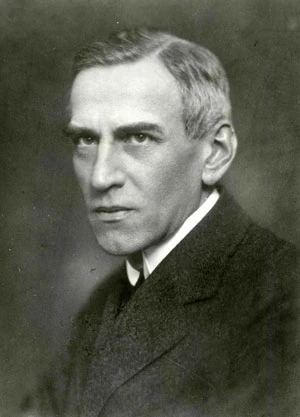
Wilhelm Stenhammar
Biography
Wilhelm Stenhammar (1871–1927) was a Swedish composer, conductor and pianist. He was born in Stockholm and received his first musical education in Stockholm. Then he went to Berlin to further his studies in music. Stenhammar was considered the finest Swedish pianist of his time. He worked intimately with the Aulin Quartet, the top Swedish string quartet of his day and one of the best then performing in Europe. In fact, he toured throughout Europe with them for many years and a piano quintet was nearly always featured on their programmes. From 1906 to 1922 Stenhammar was Artistic Director and chief conductor of the Gothenburg Symphony, the first full-time professional orchestra in Sweden. In this capacity, he organised many performances of music by contemporary Scandinavian composers. In 1909, he briefly held the position of director of music at Uppsala University, where he was succeeded the following year by Hugo Alfvén. As a composer, he became a glowing admirer of German music, especially Richard Wagner and Anton Bruckner. Stenhammar himself described the style of his First Symphony in F major as "idyllic Bruckner". He subsequently sought to emancipate himself and write in a more "Nordic" style, looking to Carl Nielsen and Jean Sibelius for guidance. The latter's Symphony No. 2, especially, had a great effect on him, leading him to change his style and withdraw his own First Symphony from performance. The result of his search for a new style was the Second Symphony in G minor, composed nearly twelve years after the First Symphony, which shows the influence of Nielsen, Sibelius and Franz Berwald among others. His works were quite varied and included two completed symphonies, a substantial Serenade for Orchestra, two piano concertos, four piano sonatas, a violin sonata, six string quartets, many songs and other vocal works, including several large-scale works for chorus or voices and orchestra. Writing in The Chamber Music Journal, R.H.R. Silvertrust opines that Stenhammar's six string quartets are the most important written between those of Johannes Brahms and Béla Bartók. His quartets show a fine grasp of instrumental timbre and technique.
Works
Past events
Bulgarian National Radio Symphony Orchestra - Mark Kadin and Johan Dalene
Bulgaria Concert Hall
Concert dedicated to the end of Sweden's presidency of the European Union
Bulgaria Concert Hall