Creator · Composer
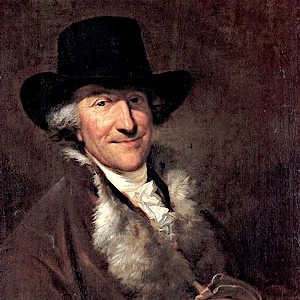
Wilhelm Friedemann Bach
Biography
The eldest son of J.S. Bach, Wilhelm Friedemann Bach (1710-1784) was a famous organist, improviser, and a complete master of counterpoint. He was born in Weimar, where his father Johann Sebastian Bach supervised his musical education and career with great attention. This education included Klavierbüchlein für Wilhelm Friedemann Bach, and also the French Suites, Inventions, the first volume of The Well-Tempered Clavier, and the six Trio Sonatas for organ. In addition to his musical training, Friedemann received formal schooling. J.S. Bach enrolled Friedemann in the associated Thomasschule. On graduating in 1729, Friedemann became a law student in Leipzig University, a renowned institution at the time, but later moved on to study law and mathematics at the University of Halle. Friedemann was appointed in 1733 to the position of organist of the St. Sophia's Church at Dresden. In 1746, he became organist of the Liebfrauenkirche at Halle, where he was deeply unhappy almost from the beginning of his tenure. In 1753, he made his first documented attempt to find another post, and thereafter made several others. All these attempts failed. Bach had at least two pupils, Friedrich Wilhelm Rust and Johann Samuel Petri. In June 1764, Friedemann left the job in Halle without any employment secured elsewhere. From 1764 until his death twenty years later he held no official position, although he had been widely recognised as one of the most distinguished organists of his time and had mastered very thoroughly the lessons taught him by his father. His own tendency to the freedom of thought of the Enlightenment had not endeared him to his Pietist superiors in Halle and independence of character rendered him gradually less employable, within the restrictive circumstances of his time. Friedemann Bach was renowned for his improvisatory skills. His compositions include many church cantatas and instrumental works, of which the most notable are the fugues, polonaises and fantasias for clavier, and the duets for two flutes. He incorporated more elements of the contrapuntal style learned from his father than any of his three composer brothers.
Works
Past events
Камерен ансамбъл „Софийски солисти“ - диригент Пламен Джуров
Зала "България"
Камерен ансамбъл „Софийски солисти“ - матине
Зала "България"
Концерт (матине)
Зала "България"