Artist · Conductor
Vilmos Komor
Biography
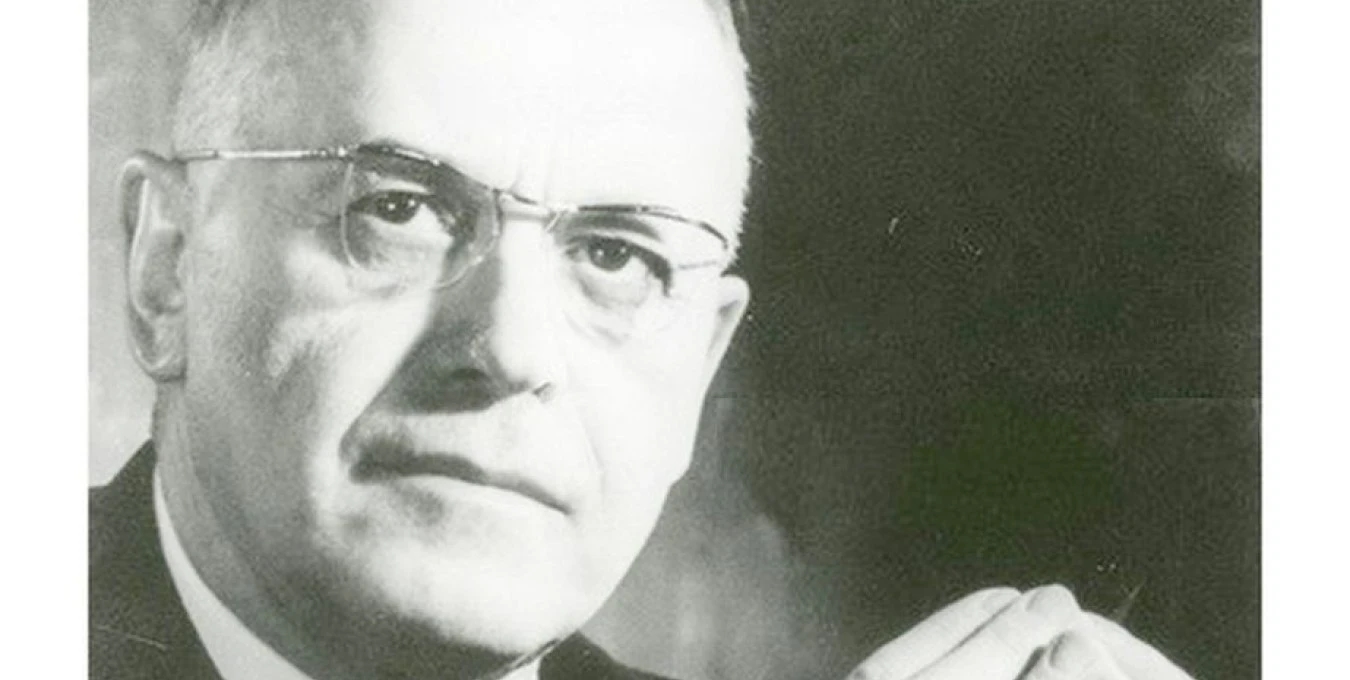
Vilmos Komor (Budapest, 28 September 1971) is a conductor, winner of the Liszt and Kossuth awards.
He studied violin at the National Music School and in 1920 became a violinist in the Opera Orchestra. From 1921 he was secretary and conductor of the Budapest Philharmonic, but was removed from his post in 1928. He conducted his first opera – as a substitute, without rehearsal – at the Vienna Volksoper, Lohengrin. He was also conductor of the City Theatre, where, in addition to operettas, he staged operas under his own direction, often featuring famous opera singers of the time, such as Beniamino Ghilli, Giacomo Lauri-Volpi, Fyodor Chaliapin, Gita Alpar and Maria Nemeth. After the bankruptcy of the City Theatre, he conducted operas and operettas in various theatres in the capital and the countryside. Under his direction, the world premiere of the operetta Maya by Szabolcs Fenies and the Hungarian premiere of Pál Abraham's Ball at the Savoy took place.
As early as 1923, he organized the Budapest Chamber Orchestra - mainly of opera musicians - with which, in addition to baroque and classical works, he also presented modern works by many contemporary composers. For example, he presented the orchestral version of Béla Bartók's Falun. With his orchestra, he began a series of open-air concerts and opera performances in the zoo, which were very successful. He often played with his orchestra on the radio and several recordings were made.
The anti-Semitic laws made his performances almost impossible, so from 1939 he worked as artistic director of the OMIKE Artists' Action, and during the war he put on several excellent performances in the Goldmark Hall on Weselényi Street.
In 1945 he became conductor of the Opera, where he initially appeared as a guest on behalf of the three-member management, and then the director Aladar Toth, appointed in 1946, hired the conductor, whom he respected and called "a tireless musical pedagogue of the masses", on a contract. Vilmos Komor remained conductor of the Opera until his death, and many outstanding opera performances are associated with his name. In the 1950s he conducted performances of the opera Gördyullo in rural areas. He is mainly remembered as the conductor of Erkel with his magnificent performances of László Hunyadi and Ban Ban, but his performances of Gounod's Faust, Verdi's Aida, Un ballo in maschera and Don Carlos, Wagner's Tannhäuser, Donizetti's Lucia di Lammermoor and Don Pasquale are also memorable. It is characteristic of his work ethic and intellectual freshness that he conducted Wagner's Tristan und Isolde for the first time at the age of 75. He was particularly successful as an opera conductor in the opera houses of the GDR (Berlin, Dresden, Leipzig) and was for a time general director of the Gewandhaus in Leipzig. In addition to his operatic activities, he also conducted symphonic concerts, especially works from the 20th century, even in his old age.
His memory is preserved by the Circle of Friends of Vilmos Komor, founded on the initiative of his daughter, the harpist Agnes Komor. They also established the Komor plaque, which is awarded annually to a young musician, accompanist or conductor of the Opera orchestra.
Past events
Concert of Nikola Nikolov and Vilmosh Komor
Bulgaria Concert Hall
Subscription "The Great Romantic Symphonies"
Bulgaria Concert Hall
Симфоничен концерт - Вилмош Комор/Васил Чернаев
Зала "България"
Популярен концерт за работниците от Завод "Георги Димитров"
Зала "България"
Симфоничен концерт - Вилмош Комор
Зала "България"