
Creator · Composer
Jenö Hubay
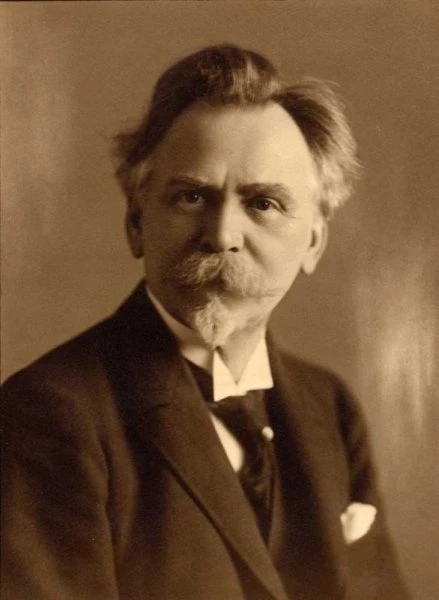
Biography
Jenő Hubay (1858–1937), also known by his German name Eugen Huber, was a Hungarian violinist, composer and music teacher. He was born into a German family of musicians in Pest, Hungary. He adopted the Hungarian version of his name, Jenő Hubay, in his twenties, while living in the French-speaking world. Hubay was trained in violin and music by his father, Karl Huber, concertmaster of the Hungarian National Opera House and a teacher at the Budapest College of Music. His mother was of Italian descent. He gave his début public performance playing a concerto at the age of eleven. At the age of thirteen, Hubay began his studies in Berlin. He remained there for five years, receiving instruction from Joseph Joachim. In 1878, following the advice of Franz Liszt, he made his début in Paris, which was a great success. Sitting in the audience was Henri Vieuxtemps, with whom Hubay formed an intimate friendship and from whom he received instruction. As a chamber musician, he formed two string quartets, one while he was in Brussels and one with David Popper during his Budapest (Budapest Quartet) years. With Popper, he performed chamber music on more than one occasion with Brahms, including the premiere of Brahms's Piano Trio No. 3 in C minor, Op. 101. In 1882, Hubay was employed at the Brussels music institute as the head of the department of violin studies. Returning to Hungary in 1886, he succeeded his father as head of the Liszt Academy. That same year, he established the Budapest Quartet with fellow teacher, cellist David Popper. Hubay's main pupils, aside from Joseph Szigeti and André Gertler, included Eugene Ormandy—who later turned to conducting—and Eugene Lehner. He taught many female violinists, including Stefi Geyer, Jelly d'Arányi and Ilona Fehér. Other pupils included Franz von Vecsey, Emil Telmányi, Carl von Garaguly, Zoltán Székely, Tibor Varga, Gerhard Taschner, Ede Zathureczky and the Italians Gianni Pavovich, and Wanda Luzzato. Hubay composed four violin concertos and a very large number of encore pieces.
Works
Past events
Symphony Concert with Young Bulgarian Soloists
Bulgaria Concert Hall