Creator · Composer
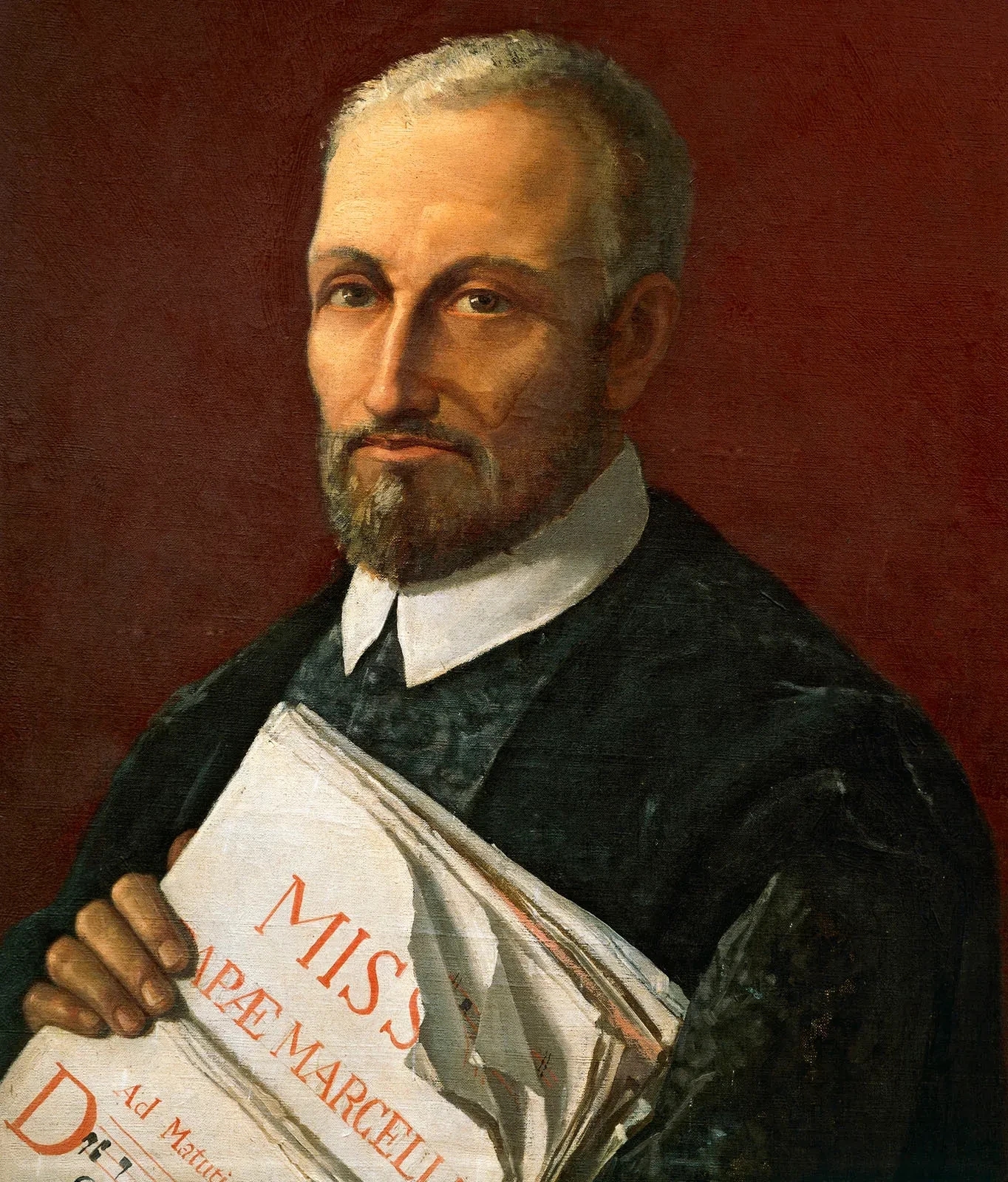
Giovanni Pierluigi da Palestrina
Biography
Giovanni Pierluigi da Palestrina (1525–1594) was an Italian Renaissance composer of sacred music and the best-known 16th-century representative of the Roman School of musical composition. He had a long-lasting influence on the development of church and secular music in Europe, especially on the development of counterpoint, and his work is considered the culmination of Renaissance polyphony. Palestrina was born in the town of Palestrina, near Rome, then part of the Papal States to Neapolitan parents, Santo and Palma Pierluigi, in 1525, possibly on 3 February. His mother died on 16 January 1536, when Palestrina was 10. Documents suggest that he first visited Rome in 1537, when he was listed as a chorister at the Basilica of Santa Maria Maggiore, one of the papal basilicas of the Diocese of Rome, which allowed him to learn literature and music. In 1540, he moved to Rome, where he studied in the school of the Huguenot Claude Goudimel. He also studied with Robin Mallapert and Firmin Lebel. He spent most of his career in the city. Palestrina came of age as a musician under the influence of the northern European style of polyphony, which owed its dominance in Italy primarily to two influential Netherlandish composers, Guillaume Du Fay and Josquin des Prez, who had spent significant portions of their careers there. From 1544 to 1551, Palestrina was the organist of the Cathedral of St. Agapito, the principal church of his native city. In 1551, Pope Julius III (previously the Bishop of Palestrina) appointed Palestrina maestro di cappella or musical director of the Cappella Giulia, (Julian Chapel, in the sense of choir), the choir of the chapter of canons at St. Peter's Basilica. Palestrina dedicated to Julius III his first published compositions (1554), a book of Masses. In 1555, Pope Paul IV ordered that all papal choristers should be clerical. As Palestrina married early in life, he was unable to continue in the chapel as a layman. During the next decade, Palestrina held positions similar to his Julian Chapel appointment at other chapels and churches in Rome, notably St. John Lateran (1555–1560, a post previously held by Lassus), and Santa Maria Maggiore (1561–1566). In 1571, he returned to the Julian Chapel and remained at St Peter's for the rest of his life. The decade of the 1570s was difficult for him personally: he lost his brother, two of his sons, and his wife, Lucrezia Gori, in three separate outbreaks of the plague (1572, 1575, and 1580, respectively). He seems to have considered becoming a priest at this time, but instead he remarried, this time to a wealthy widow, Virginia Dormoli. This finally gave him financial independence (he was not paid well as choirmaster) and was able to compose prolifically until his death. He died in Rome of pleurisy on 2 February 1594. Palestrina left hundreds of compositions, including 105 masses, 68 offertories, at least 140 madrigals and more than 300 motets. In addition, there are at least 72 hymns, 35 magnificats, 11 litanies, and four or five sets of lamentations. Palestrina's music is today regarded as the apotheosis of the polyphonic vocal ideal of that era, a music that seeks to obtain a balance between melodic independence and harmonic cooperation of individual voices. Palestrina's style is typified by a graceful melodic smoothness and careful treatment of dissonance, with the primary consideration being melody, and harmony coming as a secondary product of the melodic combination.
Works
Past events
Concert of Bulgarian Choir "Svetoslav Obretenov"
Bulgaria Concert Hall
Concert of Bulgarian Choir "Svetoslav Obreteno" and Sofia Girls' Choir
Bulgaria Concert Hall
Камерен ансамбъл „Софийски солисти“ – диригент Добрин Петков
Зала "България"
Concert of Bulgarian Choir "Svetoslav Obretenov"
Bulgaria Concert Hall
Concert of "Svetoslav Obretenov" Bulgarian Choir
Bulgaria Concert Hall