Creator · Composer
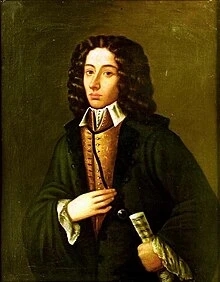
Giovanni Battista Pergolesi
Biography
Giovanni Battista Pergolesi (1710 – 1736) was born in Jesi in what is now the Province of Ancona. He studied music in Jesi under a local musician, Francesco Santi, before going to Naples in 1725, where he studied under Gaetano Greco and Francesco Feo among others. He spent most of his brief life working for aristocratic patrons such as Ferdinando Colonna, Prince of Stigliano, and Domenico Marzio Carafa, Duke of Maddaloni. Pergolesi was one of the most important early composers of opera buffa (comic opera). His opera seria, Il prigionier superbo, contained the two-act buffa intermezzo, La serva padrona (1733), which became a very popular work in its own right. When it was performed in Paris in 1752, it prompted the so-called Querelle des Bouffons ("quarrel of the comic actors") between supporters of serious French opera by the likes of Jean-Baptiste Lully and Jean-Philippe Rameau and supporters of new Italian comic opera. Pergolesi was held up as a model of the Italian style during this quarrel, which divided Paris's musical community for two years. Among Pergolesi's other operatic works are his first opera seria La Salustia (1732), Lo frate 'nnamorato (1732), L'Olimpiade (1735) and others. Pergolesi also wrote sacred music. His Stabat Mater (1736) for soprano, alto, string orchestra and basso continuo is his best-known sacred work. He wrote a number of secular instrumental works, including a violin sonata and a violin concerto. Pergolesi died on 16 or 17 March 1736 at the age of 26 in Pozzuoli from tuberculosis and was buried at the Franciscan monastery one day later.
Works
Past events
ClassicArt Presents: "Vivaldi, Pergolesi, Mozart"
Bulgaria Chamber Hall
Pärt & Pergolesi
Bulgaria Concert Hall
Stabat Mater
Bulgaria Concert Hall
Women in the Art
Bulgaria Concert Hall