Creator · Composer
Giacomo Carissimi
Biography
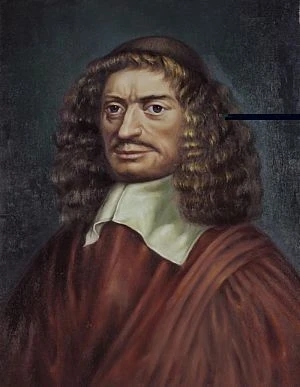
Giacomo Carissimi (1605–1674) is one of the most celebrated masters of the early Baroque or, more accurately, the Roman School of music. Carissimi established the characteristic features of the Latin oratorio and was a prolific composer of masses, motets and cantatas. Carissimi's exact birthdate is not known, but it was probably in 1604 or 1605 in Marino near Rome, Italy. Of his early life, almost nothing is known. His first known appointments were at Tivoli Cathedral, under the maestri di cappella Aurelio Briganti Colonna, Alessandro Capece and Francesco Manelli; from October 1623 he sang in the choir, and from October 1624 to October 1627, he was the organist. In 1628, Carissimi moved north to Assisi, as maestro di cappella at the Cathedral of San Rufino. In 1628, he obtained the same position at the church of Sant'Apollinare belonging to the Collegium Germanicum in Rome, which he held until his death. This was despite him receiving several offers to work in very prominent establishments, including an offer to take over from Claudio Monteverdi at San Marco di Venezia in Venice. In 1637, he was ordained a priest. In 1656, Christina of Sweden appointed Carissimi as her maestro di cappella del concerto di camera. Carissimi seems to have never left Italy at all during his entire lifetime. He died in 1674 in Rome. The great achievements generally ascribed to Carissimi are the further development of the recitative, introduced by Monteverdi, which is highly important to the history of dramatic music. Carissimi is also noted as one of the first composers of oratorios, with Jephte as probably his best-known work, along with Jonas. These works and others are important for establishing the form of oratorio unaccompanied by dramatic action, which maintained its hold for 200 years. His influence spread far into Germany and France. Much of the musical style of Johann Caspar Kerll and Marc-Antoine Charpentier, for instance, was influenced by Carissimi.
Works
Past events
Visiting the Cultural Center - Kremikovtsi
House of Culture, Buhovo, Kremikovtzi District, Bulgaria