Creator · Composer
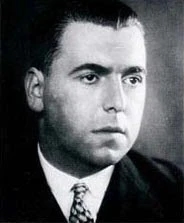
Erwin Schulhoff
Biography
Erwin Schulhoff (1894–1942) was an Austro-Czech composer and pianist. He was one of the figures in the generation of European musicians whose successful careers were prematurely terminated by the rise of the Nazi regime in Germany and whose works have been rarely noted or performed. Schulhoff was born in Prague into a German-Jewish family. Antonín Dvořák encouraged Schulhoff's earliest musical studies, which began at the Prague Conservatory when he was ten years old. He studied composition and piano there and later in Vienna, Leipzig, and Cologne, where his teachers included Claude Debussy, Max Reger, Fritz Steinbach, and Willi Thern. He won the Mendelssohn Prize twice, for piano in 1913 and for composition in 1918. He served in the Austro-Hungarian army during World War I and was wounded. He lived in Germany after the war before returning in 1923 to Prague, where he joined the faculty of the conservatory in 1929. He was one of the first generation of classical composers to find inspiration in the rhythms of jazz music. Schulhoff also embraced the avant-garde influence of Dadaism in his performances and compositions after World War I. In the 1930s, Schulhoff faced mounting personal and professional difficulties. Because of his Jewish descent and his radical politics, he and his works were labelled degenerate and blacklisted by the Nazi regime. He could no longer give recitals in Germany, nor could his works be performed publicly. His communist sympathies, which became increasingly evident in his works, also brought him trouble in Czechoslovakia. When the Nazis invaded there in 1939, he had to perform under a pseudonym. In 1941, the Soviet Union approved his petition for citizenship, but he was arrested and imprisoned before he could leave Czechoslovakia. In June 1941, Schulhoff was deported to the Wülzburg prison near Weißenburg, Bavaria. He died there one year later from tuberculosis.
Works
Past events
Sofia Philharmonic visits March Music Days - Rousse
Dohodno Zdanie (Profitable building), Rousse, Bulgaria
Symphony concert for the International Day of Francophonie
Bulgaria Concert Hall
Symphony concert with music from American Composers
Bulgaria Concert Hall
Evening of Czech music
Bulgaria Concert Hall