
Creator · Composer
Egon Wellesz
Biography
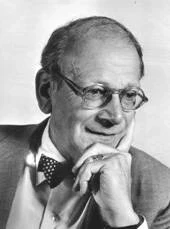
Egon Wellesz (1885–1974) was born in Vienna. Wellesz originally studied law in accordance with his father's wishes, but devoted himself entirely to music after attending a performance of Der Freischütz staged by Gustav Mahler at the Vienna Court Opera. He studied in Vienna under Arnold Schoenberg – purportedly his first private pupil – as well as Guido Adler, who founded the musicological institute in Vienna. These dual influences shaped much of his musical and scholarly thought. In 1913, Wellesz embarked upon what would become a lifelong interest in the musical achievements of Byzantium. Wellesz was the first pupil of Schoenberg to gain independent success as a composer, receiving a contract from Universal Edition before Berg or Webern. However, it was with dramatic music that Wellesz really made his mark, starting with the ballet Das Wunder der Diana in 1914. In the following 12 years, he completed five operas and three ballets, many of the libretti and ballet scenarios written by the important literary figures Hugo von Hofmannsthal and Jakob Wassermann. Operas such as Alkestis (1924) and Die Bakchantinnen (1931) take their subject matter from ancient mythology and, in contrast to the Wagnerian tradition. In 1922 Wellesz, along with Rudolph Reti and others, founded the Internationale Gesellschaft für Neue Musik (IGNM) following the Internationale Kammermusikaufführungen Salzburg, a festival of modern chamber music held as part of the Salzburg Festival. This soon evolved into the International Society for Contemporary Music, founded in 1923 with its headquarters in London. The Cambridge academic Edward J. Dent, whom Wellesz had met on his first trip to London in 1906, was elected as its president. His links to England turned out to be fortunate in 1938 when Wellesz was forced to leave Austria in the wake of the Anschluss. By good fortune he was in Amsterdam on 12 March 1938 to hear his orchestral suite Prosperos Beschwörungen ("Prospero's Invocation", after The Tempest) conducted by Bruno Walter. Once in England he worked for a time on Grove's Dictionary of Music, but in July 1940 he was interned as an enemy alien, ultimately in Hutchinson Camp in the Isle of Man. He gained his release later that year, on 13 October, thanks to intercessions by Ralph Vaughan Williams and H. C. Colles, the long-standing chief music critic of The Times. Following his internment in 1940 Wellesz found himself unable to compose, a creative block eventually broken by the composition of the String Quartet No 5 (1943–44), the first important work of his English period. His response to the great English poet Gerard Manley Hopkins also helped re-kindle his urge to compose, resulting in his setting of The Leaden and the Golden Echo in 1944. Despite his composing, Wellesz remains best known as an academic and teacher, and for his extensive scholarly contributions to the study of Byzantine music and opera in the 17th century. These contributions brought for him an honorary doctorate from Oxford University in 1932 and later a Fellowship at Lincoln College, Oxford, where he remained until his death.
Works
Past events
Opening of Austrian Music Weeks Festival 2015
Bulgaria Concert Hall