Creator · Composer
Edison Denisov
Biography
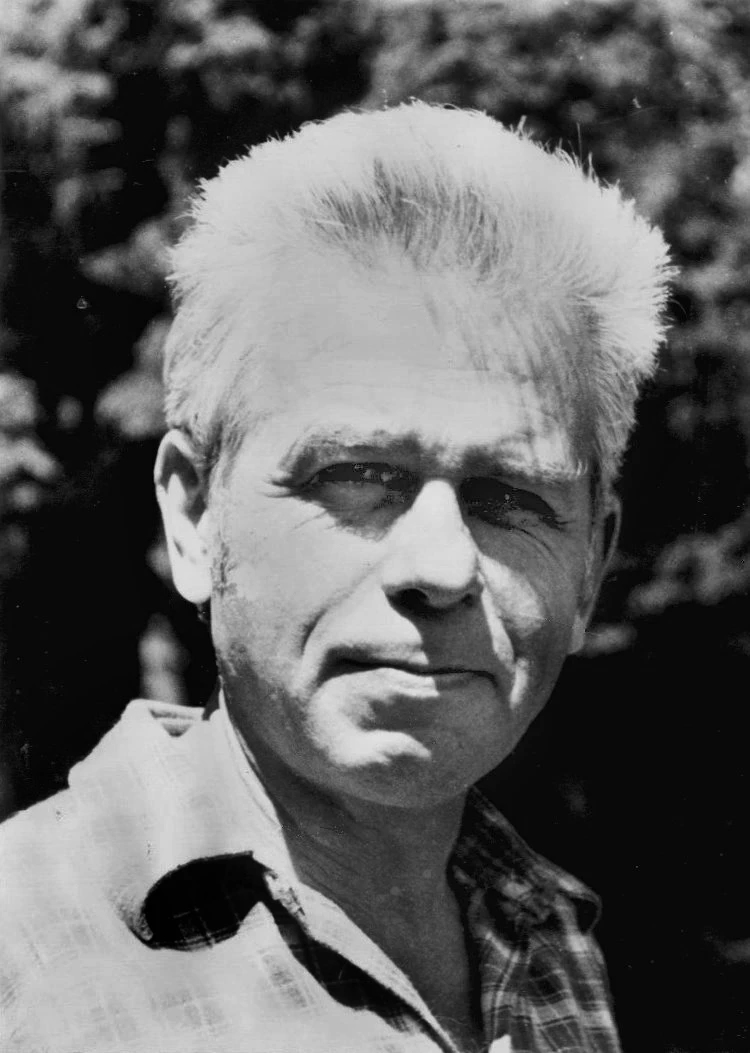
The Russian composer EDISON DENISOV was born in Tomsk, Siberia, into the family of a radio physicist, who gave him the very unusual first name Edison, in honour of Thomas Edison. Having initially studied mathematics, he began taking lessons in composition with great Russian composer Dmitri Shostakovich who enthusiastically supported him. In 1951–56, Denisov studied at the Moscow Conservatoire, where, besides composition, he took serious interest in music theory. After graduating from the Moscow Conservatoire, he began teaching orchestration there, and later formed his own class in composition, where many a young composer underwent their crucial formation. His music is remarkable for its modern mindset and bold musical language. Although exposure to specimens of twentieth-century western music were encumbered by difficulties imposed by the political system, Denisov maintained an active interest in modern compositional techniques, experimenting and seeking his own path as an artist, wrote articles (The New Technique – Not a Fashion, 1966). Denisov received international recognition for his cycle for soprano and chamber ensemble Le soleil des Incas ('The Sun of the Inkas', 1964) by Chilean poet Gabriela Mistral, dedicated to great French composer and conductor Pierre Boulez. In 1965 the work received a series of successful performances at the New Music Festival in Darmstadt and in Paris. Igor Stravinsky thought much of the piece, discovering the "remarkable talent" of its composer. However, Denisov came under the harsh criticism of the Union of Soviet Composers and in particular of the Union's Chairman, Tikhon Khrennikov, for its "western influences". In 1979, at the Sixth Congress of the Union of Soviet Composers, Edison Denisov was blacklisted as one of "Khrennikov's Seven" who were banned from participation in a number of festivals in the West. Denisov became a leader of the Association for Contemporary Music reestablished in Moscow in 1990. In 1991, at the invitation of Pierre Boulez, he moved to Paris to work at the IRCAM experimental music institute. In the last years of his life, Denisov lived in France where, following an accident and protracted period of illness, he died in a Paris hospital in 1996. Denisov’s oeuvre is iconic for contemporary Russian music and the music from the second half of the twentieth century. The many works authored by Edison Denisov include: Requiem after liturgian texts and poems by Francisco Tanzer for soprano, tenor, mixed chorus and orchestra, premiered Hamburg 1980; the opera L'écume des jours ('The Foam of Days'), based on the famous novel by French writer, poet, playwright, and musician Boris Vian (1981); History of Life and Death of Our Lord Jesus Christus according to St. Matthew for bass, tenor, chorus and orchestra (1992); produced concertos for various instruments and chamber works written for particular performers, for example, his Sonata for alto saxophone and cello (for Jean-Marie Londeix) was enjoys great popularity with saxophonists, etc. Edison Denisov has authored the books: Percussion Instruments in a Modern Orchestra (1982), Modern Music and Some Problems Arising in the Evolution of Composing Technique (1986). In France, he was conferred the honourable title Commander of the Order of Arts and Letters (1986).
Works
Past events
Socrates
Bulgaria Concert Hall
Симфоничен концерт
Зала "България"
Chamber Concert
Bulgaria Chamber Hall