Creator · Composer
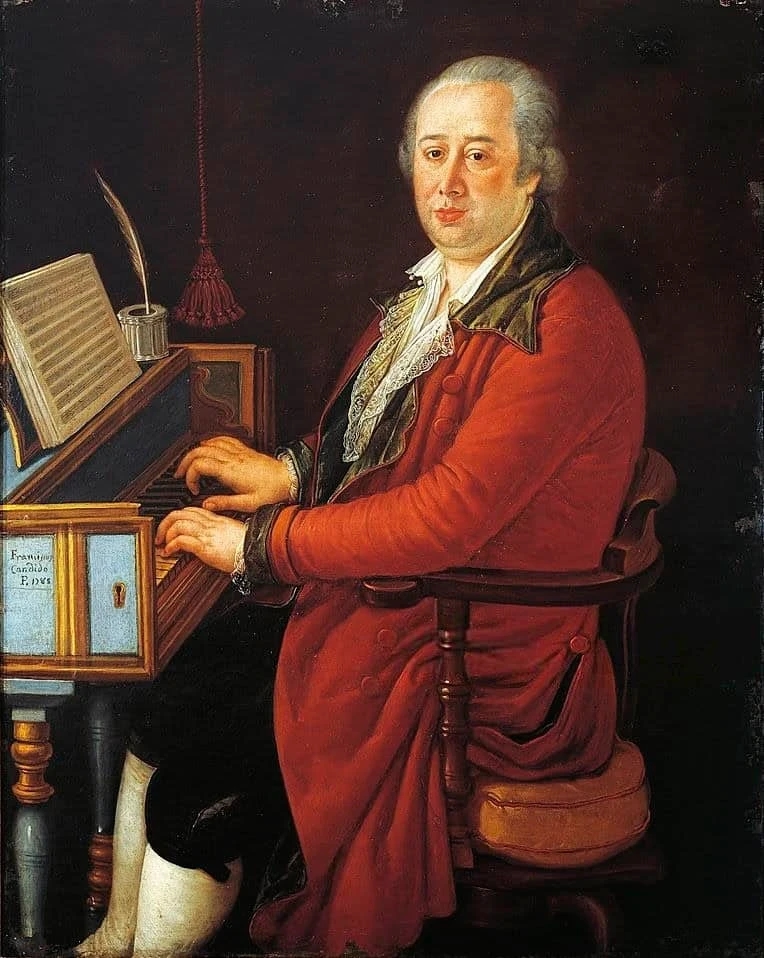
Domenico Cimarosa
Biography
Domenico Cimarosa (1749–1801) was an Italian composer of the Neapolitan school and of the Classical period. Cimarosa was born in Aversa, a town near Naples. His father, Gennaro, was a stonemason, and within days of Domenico's birth the family moved to Naples. When Domenico was seven, Gennaro fell from scaffolding and was killed. His widow, Anna, was taken on as a laundress by the monastic order of the Church of San Severo, and Cimarosa received a good education—including musical training—from the monks and clergy of the church. In 1761, he was admitted to Naples's leading college of music, the Conservatorio di S Maria di Loreto. As a student Cimarosa wrote sacred motets and masses, but he first came to public notice with the premiere in 1772 of his first commedia per musica, Le stravaganze del conte, performed at the Teatro dei Fiorentini in Naples. The work was successful, and the fame of the young composer began to spread all over Italy. Cimarosa wrote numerous operas for the theatres of Italy. In 1787, Cimarosa went to St Petersburg at the invitation of Empress Catherine II. He was one of a succession of Italian composers engaged by the Russian court over the years; others were Vincenzo Manfredini, Baldassare Galuppi, Tommaso Traetta, Giovanni Paisiello, and Giuseppe Sarti. Cimarosa was less successful in St Petersburg than some of his compatriots; the works of his subordinate, Martin y Soler, gained more favour with the empress, and this, combined with economies that meant losing most of the Italian singers, and Cimarosa's dislike of the severe Russian winters, led him to leave Russia in June 1791. After spending three months in Warsaw, Cimarosa arrived in Vienna. His music was already popular there, and the emperor, Leopold II, appointed him Kapellmeister to the court, and commissioned a new opera. The result was Il matrimonio segreto, to a text by Giovanni Bertati. The opera, performed at the Burgtheater on 7 February 1792, was so successful that Leopold had it played again the same evening in his private chambers – "the longest encore in operatic history" as one critic put it. Cimarosa's success was international. He was, together with Paisiello, the most popular opera composer in the late 18th century. He composed 60 opere buffe and 20 opere serie, many of which quickly entered the repertoire of opera houses throughout Europe. They were performed in Berlin, Copenhagen, Hamburg, London, Prague and Stockholm, as well as St Petersburg, Vienna and all the main Italian cities. Between 1783 and 1790 Haydn conducted performances of thirteen Cimarosa operas for his employers at Schloss Esterházy and many of the pieces were given several times. During the occupation of Naples by the troops of the French Republic, in 1799 Cimarosa joined the liberal party, but the monarchy was soon restored, and took strong measures against those with liberal or revolutionary connections. Cimarosa was imprisoned along with many of his political friends, and escaped the death sentence only through the intercession of influential admirers. He died in 1801, aged 51, composing until almost the end. His last opera, Artemisia was left unfinished.
Works
Past events
Anniversary concert of Georgi Spasov - 65th anniversary
Bulgaria Concert Hall
Symphony Concert - Shungo Moriama & Soloists from Japan
Bulgaria Concert Hall
Chamber Concert
Bulgaria Chamber Hall
Концерт (матине)
Зала "България"