Creator · Composer
Dieterich Buxtehude
Biography
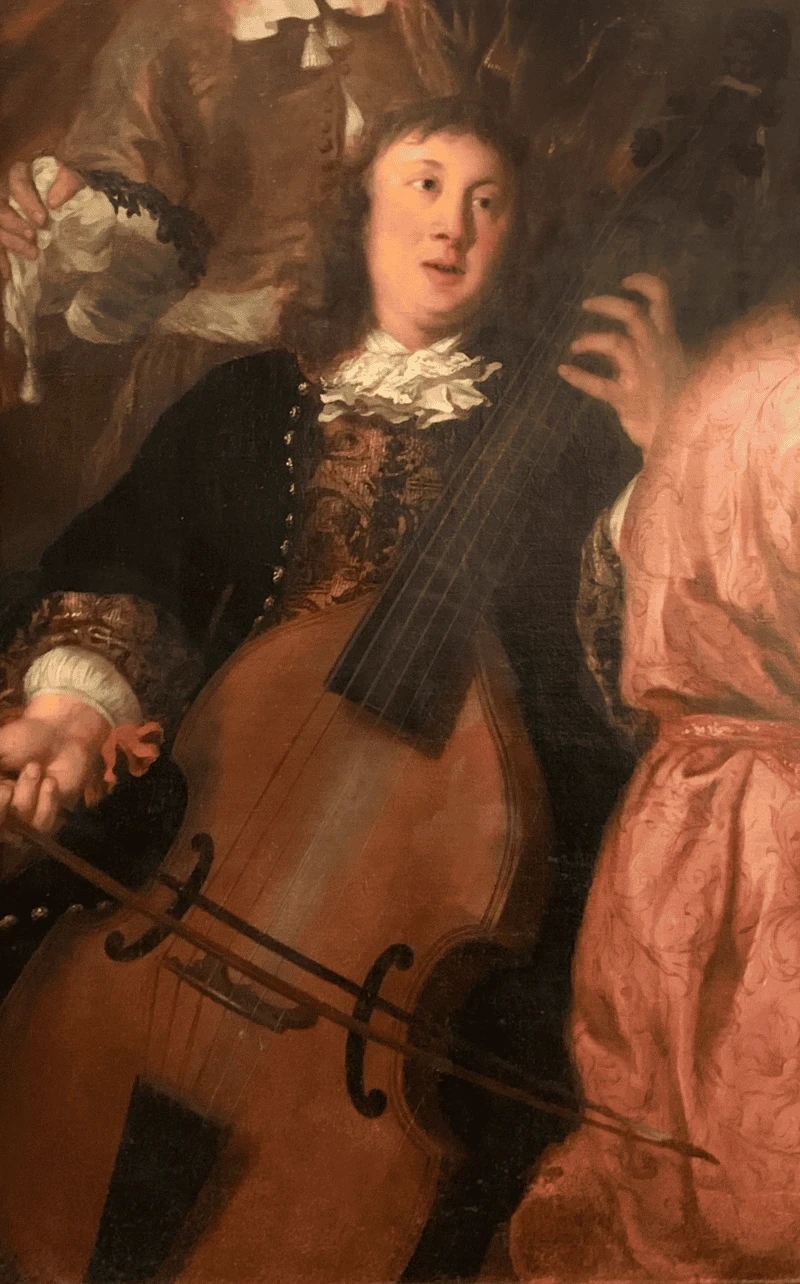
Dieterich Buxtehude (1637–1707) is among the important composers of the mid-Baroque period in Germany. He is thought to have been born with the name Diderich Buxtehude. His father — Johannes Buxtehude — was the organist at St. Olaf's church in Helsingør. His obituary stated that "he recognized Denmark as his native country”, whence he came to our region; he lived about 70 years". Dieterich was employed as an organist, first in Helsingborg (1657–1658), and then at Helsingør (1660–1668). Buxtehude's last post, from 1668, was at the Marienkirche, Lübeck which had two organs, a large one for big services and a small one for devotionals and funerals. There he succeeded Franz Tunder and followed in many of the footsteps of his predecessor. He married Tunder's daughter Anna Margarethe in 1668 – it was not uncommon practice that a man marry the daughter of his predecessor in his occupation. His post in the free Imperial city of Lübeck afforded him considerable latitude in his musical career, and his autonomy was a model for the careers of later Baroque masters such as George Frideric Handel, Johann Mattheson, Georg Philipp Telemann and Johann Sebastian Bach. In 1673, he reorganized a series of evening musical performances, initiated by Tunder, known as Abendmusik, which attracted musicians from diverse places and remained a feature of the church until 1810. In 1703, Handel and Mattheson both traveled to meet Buxtehude, who was by then elderly and ready to retire. He offered his position in Lübeck to Handel and Mattheson but stipulated that the organist who ascended to it must marry his eldest daughter, Anna Margareta. Both Handel and Mattheson turned the offer down and left the day after their arrival. In 1705, J.S. Bach, then a young man of twenty, walked from Arnstadt to Lübeck, a distance of more than 400 kilometres, and stayed nearly three months to hear the Abendmusik, meet the pre-eminent Lübeck organist, hear him play, and, as Bach explained, "to comprehend one thing and another about his art". The bulk of Buxtehude's oeuvre consists of vocal music, which covers a wide variety of styles, and organ works, which concentrate mostly on chorale settings and large-scale sectional forms. Chamber music constitutes a minor part of the surviving output, although the only chamber works Buxtehude published during his lifetime were fourteen chamber sonatas. Unfortunately, many of Buxtehude's compositions have been lost. The librettos for his oratorios, for example, survive; but none of the scores does, which is particularly unfortunate, because his German oratorios seem to be the model for later works by Johann Sebastian Bach and Georg Philipp Telemann.
Works
Past events
International Organ Night
Bulgaria Concert Hall
Music for cello and organ from the cycle "Organ Palette" with Velin Iliev
Bulgaria Concert Hall
Organ concert of Marcel Grobis
Bulgaria Concert Hall
Concert of Neva Krasteva
Bulgaria Concert Hall
Music for the soul - Concert of Neva Krasteva
Bulgaria Concert Hall