Creator · Composer
Daniel Pinkham
Biography
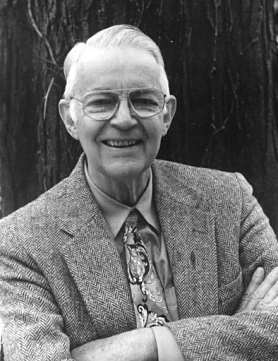
Daniel Rogers Pinkham, Jr. (1923–2006) was an American composer, organist, and harpsichordist. Born in Lynn, Massachusetts, he studied organ performance and music theory at Phillips Academy, Andover, with Carl F. Pfatteicher. At Harvard, he studied with Walter Piston; Aaron Copland, Archibald T. Davison, and A. Tillman Merritt were also among his teachers. There he completed a bachelor's degree in 1942 and a master's in 1944. He also studied harpsichord with Putnam Aldrich and Wanda Landowska, and organ with E. Power Biggs. At Tanglewood, he studied composition with Samuel Barber and Arthur Honegger, and subsequently with Nadia Boulanger. Pinkham taught at the Boston Conservatory beginning in 1946, and at the New England Conservatory of Music from 1959 until his death in 2006; while there, he created and chaired the program on early music performance. He also taught at various times at Simmons College (1953–1954), Boston University (1953–1954), and Harvard University (1957–1958). For forty-two years (1958–2000), Pinkham was the organist of King's Chapel in Boston, a position which gave him much exposure to and opportunity to write church-related music; the Sunday evening concert series he created there celebrated its 50th anniversary in 2007. He was also a frequent guest on the E. Power Biggs program on the CBS Radio Network. He performed regularly with the Boston Symphony Orchestra as an organist and as a harpsichordist, and he performed extensively with noted violinist Robert Brink. Pinkham's enormous output represents a broad cross-section of 20th-century musical trends. He produced work in virtually every genre, from symphonies to art songs, though the preponderance of his music is religious in nature, frequently choral and/or involving organ. Much of his music was written for use in church services or other ceremonial occasions, and reflected his longstanding relationship with King's Chapel. At various points in his career, he embraced plainchant, medievally-influenced modal writing, and 17th-century forms (in the 1930s and 40s, under the influence of Stravinsky and Hindemith and reflecting his commitment to the early music revival), dodecaphony and serialism (in the 1950s and 60s), electronic music (beginning in 1970), and the neo-baroque idiom. Some of Pinkham's best-known works are designed for services: the Christmas, and Wedding cantatas, the latter of which is performed particularly often.
Works
Past events
Камерна вечер
Зала "България"
Concert of Philharmonic brass quintet
Bulgaria Concert Hall