Creator · Composer
Balys Dvarionas
Biography
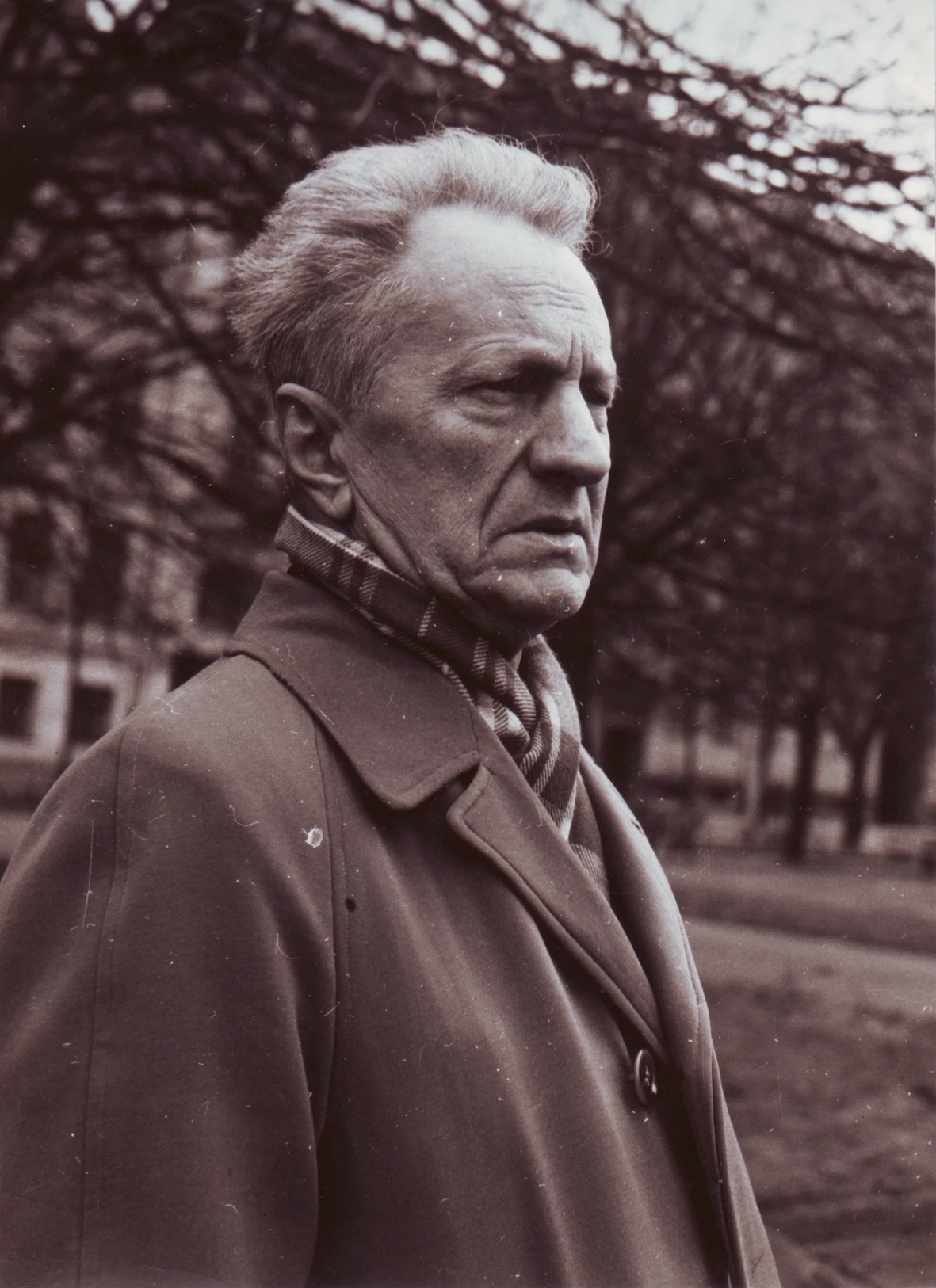
Balys Dvarionas (1904 – 1972) was a Lithuanian composer, pianist, conductor and educator, who became known as a composer after World War II. His works are in a romantic vein, with roots in folk song. He was born in Liepāja and along with his ten sisters and brothers, Dvarionas was taught music from his early childhood. After completing the middle school of commerce, Dvarionas worked as an organist and conductor of the Youth Choir of Lithuanian Society in Liepāja. In 1920, Dvarionas went to Leipzig, where he studied piano under Robert Teichmüller at the Conservatory and attended special music theory and composition courses held by Stephan Krehl and Sigfrid Karg-Elert. After graduating he spent two years studying piano in Berlin under Egon Petri, a famous German pianist. Balys Dvarionas was a synthesis of talents in piano, teaching, conducting and composing. They bloomed almost all at once and Dvarionas soon became one of the most famous personalities in Lithuanian music. From 1924 on, he performed throughout Lithuania, and in 1928, he began to perform abroad. In 1926 he began teaching at the Kaunas Music School (after 1933 — Lithuanian Conservatory) and in 1949 he started working at the Music Academy in Vilnius, where he continued teaching until the end of his life. In the 1930s, Dvarionas emerged as a conductor as well. He attended conducting courses in Salzburg and in 1939, he passed his examinations as an external student at the Conservatory in Leipzig. From 1935 to 1938, Dvarionas was a conductor of Kaunas Radiophone Orchestra. He worked as a head conductor of the Lithuanian Philharmonic Orchestra in 1940–1941 and 1958–1964. Dvarionas' final public performance was in 1972, with the Lithuanian Chamber Orchestra at the Philharmonic Hall, several months before he died on August 23, 1972. He composed a variety of works ranging from opera, ballet, and symphony to music for film and theater. His compositions are distinctive for their melody, emotionality, and motives drawn from folk music. Dvarionas said of his style in 1971: "My aesthetic ideals were formed under the influence of 19th century romanticism, and I believe in the musician's vocational call to spread beauty, good, harmony, to educate people and to raise them above the routine. I believe that people who say this type of view is behind the times are wrong. The ideals of human good have remained unchanged over many thousands of years: love, truth, freedom and friendship. To serve them is not a step backwards".
Works
Past events
Симфоничен оркестър на БНР – гостуване на Балис Дварионас
Зала "България"
Симфоничен концерт - Саша Попов/Недялка Симеонова
Зала "България"
Concert of State Symphony Orchestra - Plovdiv
Bulgaria Concert Hall