Creator · Composer
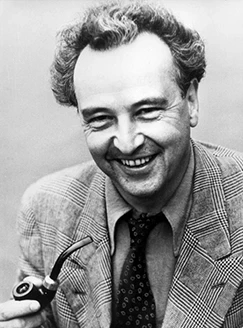
Arthur Honegger
Biography
Arthur Honegger (1892–1955) is one of the most significant composers of the twentieth century. Born to Swiss parents in Le Havre, France, he initially studied for two years at the Zurich Conservatory and later he enrolled in the Paris Conservatoire from 1911 to 1918, studying with both Charles-Marie Widor and Vincent d'Indy. He made his Paris compositional debut in 1916 and in 1918 wrote the ballet Le dit des jeux du monde, generally considered to be his first characteristic work. In the early 1920s, Honegger shot to fame with his "dramatic psalm" Le Roi David , which is still in the choral repertoire. Between World War I and World War II, Honegger was very prolific. In 1923, he wrote the orchestra piece Pacific 231 (a depiction of a steam locomotive), which gained him early notoriety. He composed also nine ballets and three vocal stage works, amongst others. One of those, Jeanne d'Arc au bûcher (1935), a dramatic oratorio to words by Paul Claudel, is considered as one of his finest compositions. Honegger always remained in touch with Switzerland, his parents' country of origin, until the outbreak of the war and the invasion of the Nazis made it impossible for him to leave Paris. He joined the French Resistance and was generally unaffected by the Nazis themselves, who allowed him to continue his work without too much interference. However, he was greatly depressed by the war. Between its outbreak and his death, he wrote his last four symphonies (numbers two to five) which are among the most powerful symphonic works of the 20th century. Of these, the second, for strings, featuring a solo trumpet which plays a chorale tune in the style of Bach in the final movement, and the third, subtitled Symphonie Liturgique with three movements that evoke the Requiem Mass (Dies irae, De profundis clamavi and Dona nobis pacem), are probably the best known. Written in 1946 just after the end of the war, it has parallels with Benjamin Britten's Sinfonia da Requiem of 1940. In contrast with this work is the lyrical, nostalgic Symphony No. 4, subtitled "Deliciae Basilienses" ("The Delights of Basel"), written as a tribute to days of relaxation spent in that Swiss city during the war. In 1953, he wrote his last composition, A Christmas Cantata. After a protracted illness, he died at home in Paris of a heart attack in 1955. He was given a state funeral by the French government, although he remained a Swiss national and never took French citizenship. Despite the differences in their styles, he and fellow Les Six member Darius Milhaud were close friends, having studied together at the Paris Conservatoire. Milhaud dedicated his fourth string quintet to Honegger's memory, while Francis Poulenc similarly dedicated his Clarinet Sonata.
Works
Past events
Honegger - Jeanne d'Arc
Bulgaria Concert Hall
Kirill Troussov & Georgi Dimitrov
Bulgaria Concert Hall
60 years Sofia Soloists Chamber Ensemble
Bulgaria Concert Hall
Симфоничен оркестър на БНР - Георги Димитров и солисти
Зала "България"
Fifth concert from the "Classical and Romantic" Cycle
Bulgaria Concert Hall