Creator · Composer
Arrigo Boito
Biography
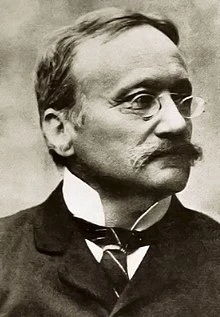
Italian librettist, composer, poet and journalist Arrigo Boito (1842–1918) is best known today for his libretti, especially those for Giuseppe Verdi's last two monumental operas Otello and Falstaff, and Amilcare Ponchielli's operatic masterpiece La Gioconda, and his own opera Mefistofele. Born in Padua, he studied music at the Milan Conservatory with Alberto Mazzucato until 1861. His only completed opera, Mefistofele, based on Goethe's Faust, was given its first performance on 5 March 1868, at La Scala, Milan. The premiere, which he conducted himself, was badly received, provoking riots and duels over its supposed "Wagnerism". Boito withdrew the opera from further performances to rework it, and it had a more successful second premiere, in Bologna on 10 April 1875. Boito left incomplete a further opera, Nerone, which he had been working at, on and off, between 1877 and 1915. Excluding its last act, for which Boito left only a few sketches, Nerone was finished after his death by Arturo Toscanini and Vincenzo Tommasini and premiered at La Scala in 1924. After the initial failure of his Mefistofele Boito began to concentrate on his literary career. He wrote libretti for greater operas by two other composers. As "Tobia Gorrio" (an anagram of his name), he provided the libretto for Amilcare Ponchielli's La Gioconda. His collaboration with Verdi began in 1879; in addition to Otello (1887) and Falstaff (1893) he adapted Simon Boccanegra for revival in 1881 and made sketches for Re Lear, though never set by Verdi. In later life Boito also supported a number of young composers. Towards the end of his musical career, Boito succeeded Giovanni Bottesini as director of the Parma Conservatory after the latter's death in 1889 and held the post until 1897. He received the honorary degree of Doctor of Music from the University of Cambridge in 1893.
Works
Past events
Opeta Gala with Angela Gheorghiu & Nayden Todorov
Bulgaria Concert Hall
Sir Bryn Terfel & Maestro Nayden Todorov
Bulgaria Concert Hall
Pre-season concert in memory of Nicolai Ghiaurov
Bulgaria Concert Hall