Creator · Composer
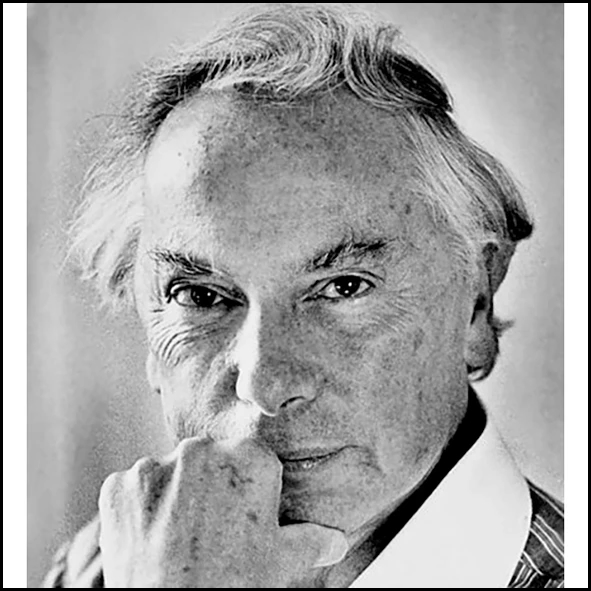
Andrzej Panufnik
Biography
Sir Andrzej Panufnik (1914–1991), who became established as one of the leading Polish composers, and as a conductor, he was instrumental in the re-establishment of the Warsaw Philharmonic orchestra after World War II. Panufnik was born in Warsaw, and after graduating the Warsaw Conservatory with distinction in 1936, he travelled to Vienna for his studies with Felix Weingartner. During the German occupation of Warsaw Panufnik formed a piano duo with his friend and fellow composer Witold Lutosławski, and they performed in cafés in Warsaw. During this period, he composed a Tragic Overture and a second symphony. Later, Panufnik was able to conduct a couple of charity concerts, at one of which his Tragic Overture was first performed. During the war, he lost most of his music he had composed in his first 30 years, destroyed by fire in 1944 in Warsaw. After World War II, Panufnik moved to Kraków where he was conductor of the Kraków Philharmonic Orchestra. Later he acted as director of the Warsaw Philharmonic in 1946 and 1947. During these years, Panufnik was a guest conductor with top international ensemble - with the Berlin Philharmonic, with the L'Orchestre National in Paris, and with the London Philharmonic Orchestra. In 1950, he was elected vice chairman of the UNESCO International Music Council, while in 1953 he headed an official Polish cultural delegation to China where he met with Chairman Mao Tse-tung. As Poland’s leading composer, greatly respected throughout Europe, he was under pressure, bullied to write according to the Soviet imposition of Socialist Realism, artificially “positive” music composed according to the dictates of the authorities. In 1954, he made a dramatic escape from Poland, and this resulted in a total censorship of his name and his music in Poland for 23 years. Having left Poland without any money or possessions, income from occasional conducting engagements made it hard for Panufnik to make ends meet. He received financial support from fellow composers including Ralph Vaughan Williams and Arthur Benjamin. He became a British citizen in 1961. His works were in demand by such major figures as Leopold Stokowski, Seiji Ozawa, André Previn and Sir Georg Solti, as well as Yehudi Menuhin who commissioned a violin concerto, and Mstislav Rostropovich who commissioned a cello concerto. The Royal Philharmonic Society commissioned his Ninth Symphony, Sinfonia di Speranza. Panufnik refused to return to Poland until democracy was restored in 1990. He was knighted by Queen Elizabeth II in 1991, and was posthumously awarded the Order of Polonia Restituta by Poland.
Works
Past events
Сезон 1948/1949, пети симфоничен концерт - повторение
Първо студио на БНР
Сезон 1948/1949, пети симфоничен концерт - премиера
Народен театър "Иван Вазов"