Creator · Composer
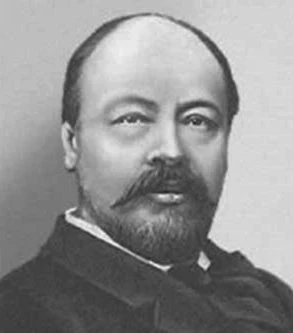
Anatoly Lyadov
Biography
Anatoly Lyadov (1855–1914) belongs to the generation of a remarkable galaxy of Russian composers of the second half of the 19th century. He showed himself as a talented composer, conductor, teacher, musical and public figure. Lyadov's work is based on the images of the Russian epic and song folklore, fairy-tale fiction; he is characterized by lyrics imbued with contemplation, a subtle sense of nature. Lyadov was born in 1855 in St. Petersburg, into a family of eminent Russian musicians. He was taught informally by his conductor stepfather Konstantin Lyadov, and then in 1870 entered the St. Petersburg Conservatory to study piano and violin. He soon gave up instrumental study to concentrate on counterpoint and fugue, although he remained a fine pianist. His natural musical talent was highly thought of by, among others, Modest Mussorgsky. He entered the composition classes of Nikolai Rimsky-Korsakov, but was expelled for absenteeism in 1876. In 1878, he was readmitted to these classes to help him complete his graduation composition. His published compositions are relatively few due to a certain self-critical lack of confidence. Many of his works are variations on or arrangements of pre-existing material (for example his Russian Folksongs, Op. 58). He did compose a large number of piano miniatures, of which his Musical Snuffbox of 1893 is perhaps most famous. Like many of his contemporaries, Lyadov was drawn to intensely Russian subjects. Much of his music is programmatic; for example his tone poems Baba Yaga, Kikimora, The Enchanted Lake, inspired by the painting by Arseny Meshchersky, The Enchanted Lake. These short tone poems, probably his most popular works, exhibit an exceptional flair for orchestral tone colour. In his later compositions he experimented with tonality, like his younger contemporary Alexander Scriabin. He taught at the St. Petersburg Conservatory from 1878, his pupils including Sergei Prokofiev, Nikolai Myaskovsky, Mikhail Gnesin, Lazare Saminsky, Lyubov Streicher and Boris Asafyev.
Works
Past events
Slavic Holiday
Bulgaria Concert Hall
Symphonic Concert - Uroš Lajovic and Alexander Sinchuk
Bulgaria Concert Hall
Симфоничен оркестър на БНР - Емил Табаков и Татяна Самуил
Зала "България"
Симфоничен оркестър на БНР - „Изток-Изток”
Първо студио на БНР
Symphonic concert in memory of Ivan Marinov - 80th anniversary of his birth
Bulgaria Concert Hall