Creator · Composer
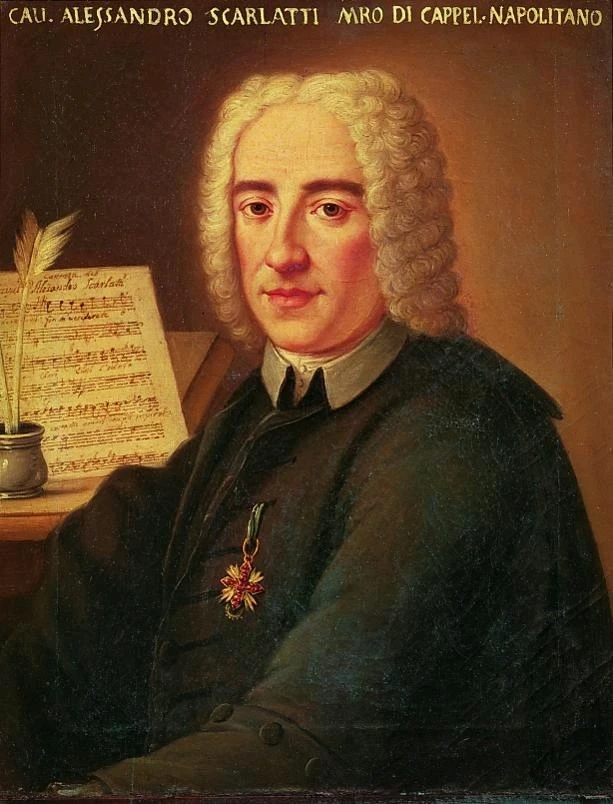
Alessandro Scarlatti
Biography
Italian Baroque composer Alessandro Scarlatti (1660–1725) is considered the most important representative of the Neapolitan school of opera. Born in Palermo, he is generally said to have been a pupil of Giacomo Carissimi in Rome, but his early works seem to show the influence of Stradella and Legrenzi. In 1684, he became maestro di cappella to the viceroy of Naples, where he produced a long series of operas, remarkable chiefly for their fluency and expressiveness. In 1702, Scarlatti left Naples and moved to Florence. He enjoyed the patronage of Ferdinando de' Medici, for whose private theatre near Florence he composed operas, and of Cardinal Ottoboni, who made him his maestro di cappella. After visiting Venice and Urbino in 1707, Scarlatti took up his duties in Naples again in 1708, and remained there until 1717. By this time Naples seems to have become tired of his music; the Romans, however, appreciated it better, and it was at the Teatro Capranica in Rome that he produced some of his finest operas as Telemaco (1718), La Griselda (1721), as well as some noble specimens of church music, including a Messa di Santa Cecilia for chorus and orchestra, composed for Cardinal Francesco Acquaviva in 1721. His last work on a large scale appears to have been the unfinished Erminia serenata for the marriage of the prince of Stigliano in 1723. He died in Naples in 1725 and is entombed there at the church of Santa Maria di Montesanto. He was the father of two other composers, Domenico Scarlatti and Pietro Filippo Scarlatti.
Works
Past events
Neapolitan Serenade
Vrana Park-Museum, Sofia, Bulgaria
"Musica Neapoletana"
Bulgaria Concert Hall