Artist · Conductor
Alan Dudley Bush
Biography
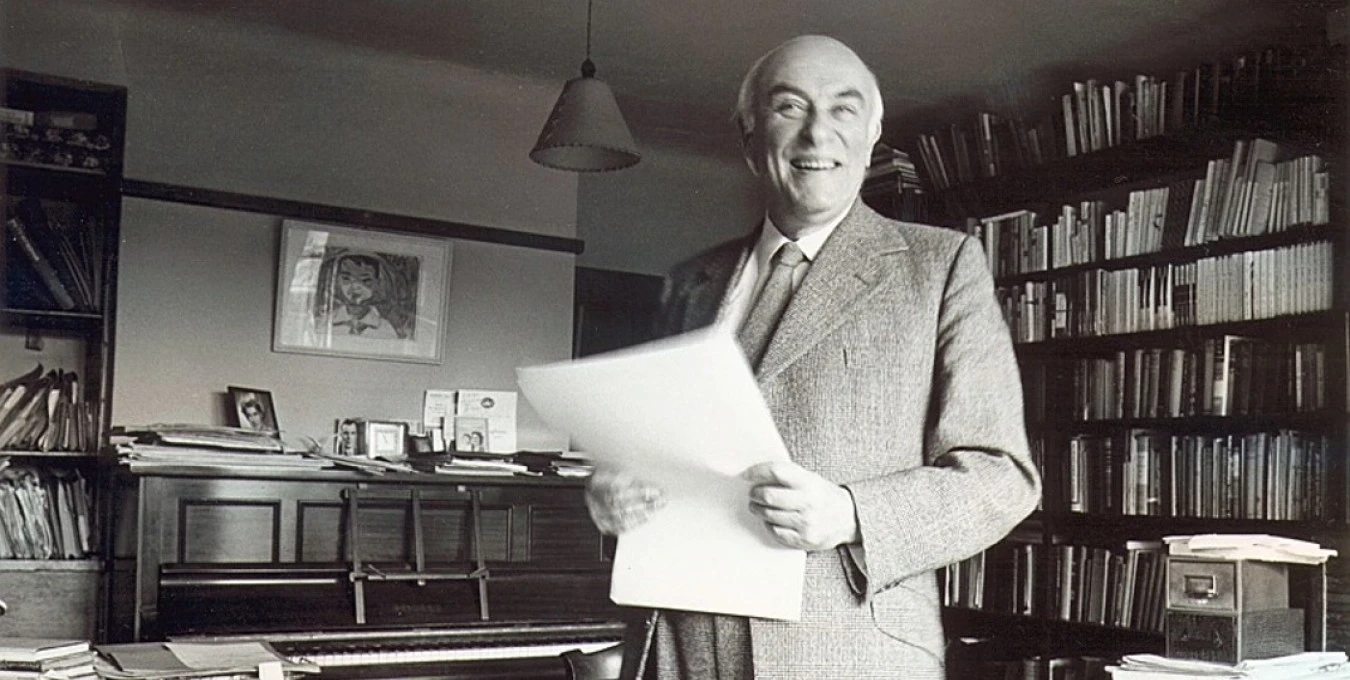
Alan Dudley Bush (22 December 1900 London – 31 October 1995 Watford, East Anglia) was a British composer, musicologist, pianist and public figure.
Born into a wealthy middle-class family, Bush's great-grandfather founded a successful chemical manufacturing company. From 1918 to 1922 he studied at the Royal Academy of Music with Frederick Corder (composition) and Tobias Matthay (piano); he won a number of student prizes and distinctions. During his student years he wrote his first mature piano pieces and a rough version of an early opera, The Last Days of Pompeii, which he later destroyed. After completing his course he continued to study composition privately with John Ireland (until 1927). As a pianist, he spent several years honing his skills with Benno Moiseevich, and in the latter half of the 1920s he studied in Berlin with Arthur Schnabel.
In 1925-1954 he taught harmony and composition at the Royal Academy of Music. He founded (1936) the Workers' Music Association of England and was its honorary president since 1941. He repeatedly visited the USSR on tours. He adapted English folk songs in a modern style, and also wrote several dozen songs for pop performance. As a musicologist, he wrote articles on the history of music in general. Among A. Bush's students were Merrill H., Bowman O., Winters J., Long N., Bhatia V., Munro A., Welsh T., Baxter T. In 1982, A. Bush visited the Lascaux caves. This visit inspired him to write his symphony, op. 94, subtitled "Lascaux". This symphony (his last major orchestral work) was premiered in Manchester on March 25, 1986. by the BBC Philharmonic Orchestra conducted by Edward Downes.
Past events
Шестнадесети симфоничен концерт - повторение
Първо студио на БНР
Сезон 1948/1949, шестнадесети симфоничен концерт - премиера
Народен театър "Иван Вазов"
Season 1946/1947, Seventh Symphony Concert - Premiere
Ivan Vazov National Theatre, Sofia, Bulgaria